What is Benign Lesion Removal – Diathermy?

Benign Lesion Removal using diathermy at Anova Skin Clinic is a minimally invasive treatment that delivers a high-frequency electromagnetic current causing localised thermolysis to destroy benign lesions and growths. Diathermy is derived from the Greek words dia ('through') and therme ('heat') – literally translating as 'heating through' – precisely describing how the treatment works. The localised heat coagulates and destroys the targeted tissue, initiating the body's healing response, progressive skin repair and lesion clearance. Diathermy is often less expensive than surgical excision or ablative lasers and can effectively treat a range of benign skin lesions and growths including skin tags, moles, seborrhoeic keratoses, sebaceous hyperplasias, syringomas, angiomas and superficial capillaries.
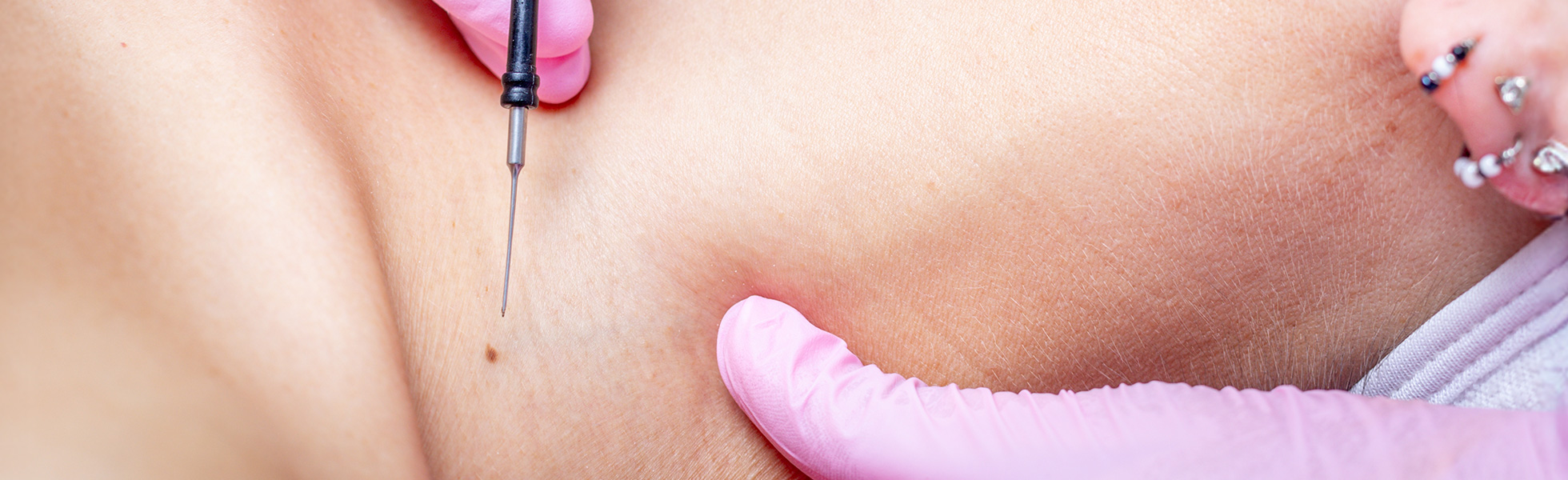
Benign Lesion Removal – Diathermy

Summary on Benign Lesion Removal – Diathermy

NAMES

  • Diathermy
  • Fine Wire Diathermy
  • Electrodessication

What is Benign Lesion Removal – Diathermy?

MECHANISM How Does Benign Lesion Removal – Diathermy Work?

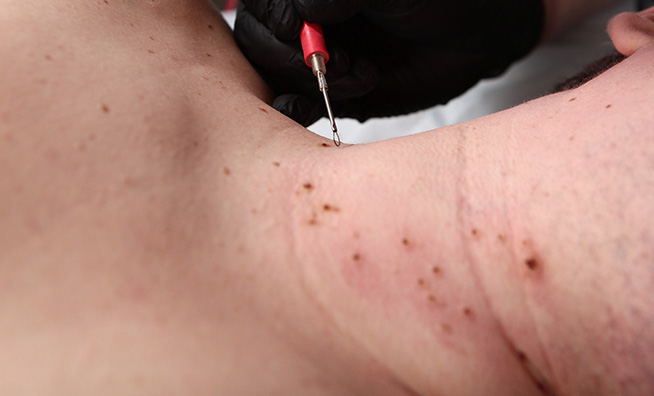
Benign Lesion Removal at Anova Skin Clinic in Perth is performed using diathermy – a precise, minimally invasive treatment using a pen-like device that delivers a controlled high-frequency electromagnetic current through a fine sterile probe to the targeted lesions and growths to destroy them.

Diathermy Action for Benign Skin Lesions & Growths:

  • A fine sterile probe delivers high-frequency electromagnetic current into the targeted lesion, generating localised heat.
  • The localised heat causes tissue damage within the lesion, including water vaporisation, cellular protein coagulation, and subsequent tissue breakdown.
  • The wound healing response is initiated; the destroyed tissue forms a small scab, allowing the skin underneath to repair, renew and replace with new cells.
  • The scab falls off over time revealing new skin underneath – usually slightly discoloured (red, lighter or darker) than surrounding skin for an additional few weeks as it remodels and fully heals.

Diathermy Treatment Experience

RESULTS

What Results Can I Expect from Benign Lesion Removal – Diathermy?

Depending on the lesion treated, results may include:

  • Lesion Removal – full removal of the targeted lesion in one or more sessions, depending on lesion type, size and depth.
  • Vascular Clearance – reduced visibility or complete clearance of cherry angiomas, spider angiomas or superficial capillaries.
  • Even Skin Texture – improved skin surface texture following removal of raised or protruding lesions such as skin tags, seborrheic keratosis and sebaceous hyperplasia.

⚠️Results are individual and vary depending on the lesion type, size and depth, skin tone and number of treatments required. Your dermal clinician will discuss realistic expectations during your consultation.

⚠️Addition of Omnilux Medical LED – specifically Omnilux Plus (830nm near-infrared light) –  when performed prior to or straight after helps to accelerate skin healing and recovery and decrease possibility of scarring.

When Can I Expect to See Results from Benign Lesion Removal – Diathermy?

Typically, the removal of some lesions can be achieved during the first treatment, leaving a micro scab covering the injured skin underneath. The results are visible once the micro scab has fallen off – typically within 1-2 weeks and the treated area has healed and remodelled – commonly within 4-8 weeks depending on lesion size, type and individual healing response.

⚠️Benign lesions and growths have a different cellular composition from surrounding skin – the texture and pigmentation of the treated area may not perfectly match the surrounding skin after removal – particularly in darker Fitzpatrick skin tones where post-treatment pigmentation changes are more common. A thorough consultation is required prior to treatment to discuss expected outcomes for your specific lesion and skin type.

NORMAL RESPONSE

What Does Diathermy Feel Like?

During treatment, a mild to moderate discomfort, stinging, heat or burning sensation at the lesion site is normal.

⚠️Discomfort levels vary between individuals and depend on skin sensitivity, lesion type, size, depth and location. A topical anaesthetic cream can be applied 45-60 mins prior to treatment to minimise discomfort.

What Does Diathermy Feel Like?

Following treatment, mild redness, heat, swelling, sensitivity and itching around the treated area are all normal responses.

DOWNTIME

What Is the Downtime After Diathermy?

Downtime varies depending on the number, size and type of lesions treated and individual healing response.

  • Redness, heat, swelling, sensitivity and itching around the treated area typically resolve within 1-3 days.
  • A scab or crust formed over the treated area naturally falls off within 1-2 weeks.
  • Skin healing typically completes within 4-8 weeks.

⚠️Benign lesions and growths have a different cellular composition from surrounding skin – the texture and pigmentation of the treated area may not perfectly match the surrounding skin after removal.

PROTOCOL

How Many Diathermy Treatments Do I Need and How Often?

  • Removal: 1-3 treatments spaced 4-8 weeks apart to allow adequate healing between sessions. Many lesions can be removed in a single session; however, larger or deeper lesions may require more than one session for a satisfying result. 
  • Maintenance: Successfully treated benign lesions typically do not return. However, new lesions may develop in the area over time due to ongoing natural ageing, UV exposure and genetic predisposition – periodic treatments can be scheduled as needed.

⚠️Annual skin cancer checks with a medical doctor are strongly recommended.

⚠️Treatment protocol is customised to your lesion type, size, depth and skin tone. Your dermal clinician will recommend the most appropriate plan during consultation.


COST & DURATION How Much Does Diathermy Treatment Cost & How Long Does it Take?

At Anova Skin Clinic in Floreat Forum, Perth, the cost of diathermy generally ranges from $149-$349 per session taking between 10-40 minutes depending on the treated lesion number and size.

  • Diathermy XS – 1-3 lesions OR 10min ………$149
  • Diathermy S – 3-6 lesions OR 15min ………..$199
  • Diathermy M – 6-12 lesions OR 20min …….$249
  • Diathermy L – 12-20 lesions OR 30min …….$299
  • Diathermy XL – 20+ lesions OR 40min ……..$349

Benign Lesion Removal Risks & Suitability

RISKS What Are the Possible Side Effects of Diathermy?

⚠️Serious side effects are rare when treatment is performed by a qualified professional with appropriate technique, client assessment and aftercare.

Side effects beyond the normal healing response are uncommon but may include prolonged redness, pigmentation changes including post-inflammatory pigmentation or hypopigmentation, skin infection and scarring.


SUITABILITY Who Is Not Suitable for Diathermy?

Diathermy is not suitable for everyone. You may not be a candidate if any of the following apply:

  • Undiagnosed, suspicious, growing, changing, bleeding or asymmetrical skin lesions or moles – ⚠️Doctor’s clearance confirming the lesion is benign is required prior to any removal treatment.
  • Implanted electrical devices such as a pacemaker around the treatment area – high-frequency electromagnetic current may interfere with device function.
  • Active skin infection (bacterial or fungal or viral like cold sores or herpes) or open wounds in the treatment area.
  • Active skin conditions such as eczema, psoriasis or dermatitis in the treatment area.
  • Health conditions and medications that negatively affect skin healing.
  • Active cancer or history of skin cancer in the treatment area.

⚠️This list is not exhaustive – a thorough consultation is required prior to treatment.

Diathermy Preparation & Aftercare

PREPARATION How Do I Prepare for Diathermy Treatment?

2-4 Weeks Before:

  • Daily SPF 50+ sunscreen and prescribed skincare with melanin inhibiting products to optimise skin health and reduce the risk of side effects.
  • Direct and prolonged sun exposure avoided – particularly during peak UV hours.
  • Other professional treatments in the area avoided.

1-2 Days Before:

  • Alcohol avoided – increases skin sensitivity.
  • Retinoids, scrubs and AHA exfoliants avoided – may increase skin sensitivity and adverse reaction risk.

On the Day:

  • All medications and medical conditions to be disclosed to ensure safe treatment.

AFTERCARE What Is the Diathermy Aftercare?

1-3 Days After:

  • Makeup and touching the treatment area avoided.
  • Bepanthen or Savlon Antiseptic Cream over the clean area used several times a day to keep it moisturised and minimise risk of infection.

3-7 Days After

  • Scab or crust allowed to fall off naturally – no picking, scratching or scrubbing as this may cause scarring or infection.
  • Skin kept clean with a gentle cleanser and moisturised with simple moisturiser – to reduce the risk of infection.
  • Direct and prolonged sun exposure avoided – particularly during peak UV hours.
  • Retinoids, scrubs, AHA exfoliants avoided until redness has fully resolved.
  • Skin treatments avoided unless advised by your clinician.

Ongoing:

  • Daily SPF 50+ sunscreen and prescribed skincare continued to reduce risk of side effects and help skin heal properly.

Services

Book a Consultation

Start with a consultation to discuss your skin concerns and review your health
history so we can formulate your personalised treatment plan.

BOOK ONLINE