What is Acne?

Acne is a common inflammatory skin condition affecting the face, chest, and back, driven by a combination of hormonal, genetic, dietary, and environmental factors – episodic and short-lived in some, persistent and chronic in others. It presents as a range of lesions from non-inflammatory comedones like blackheads and whiteheads to inflammatory pimples like papules and pustules, and in more severe cases deep painful nodules and cysts.

Acne

Types of Acne Lesions

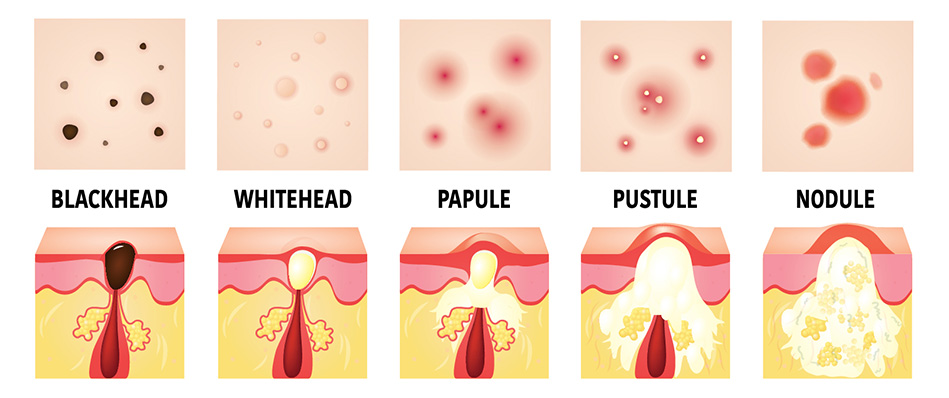
Acne lesions can be divided into non-inflammatory lesions including whitehead and blackheads – also called comadones, and inflammatory red lesions including papules, pustules, and – in more severe acne – nodule and cysts.

Types of acne lesions diagram

What Are Non-Inflammatory Acne Lesions?

Comedones are skin follicles clogged with excess sebum and dead skin cells.
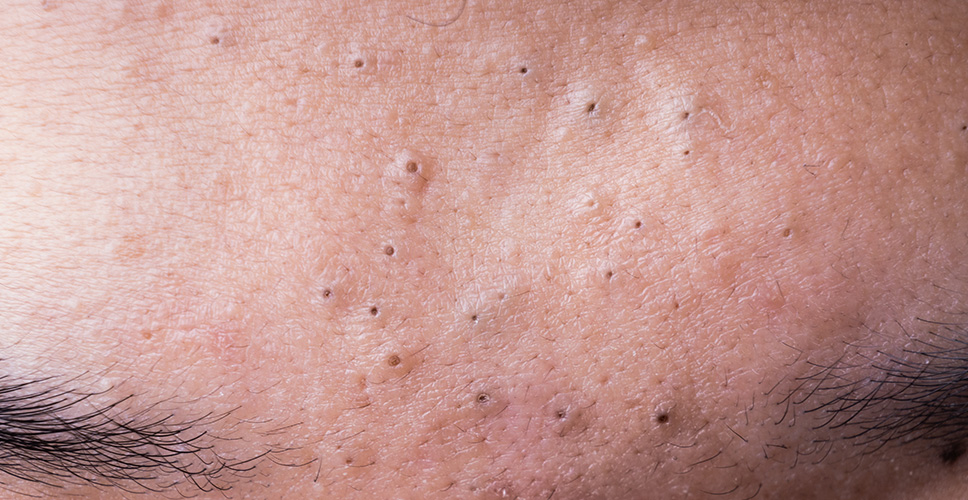
  • Blackheads (open) form when the plug is exposed to air, oxidising and turning dark at the surface.
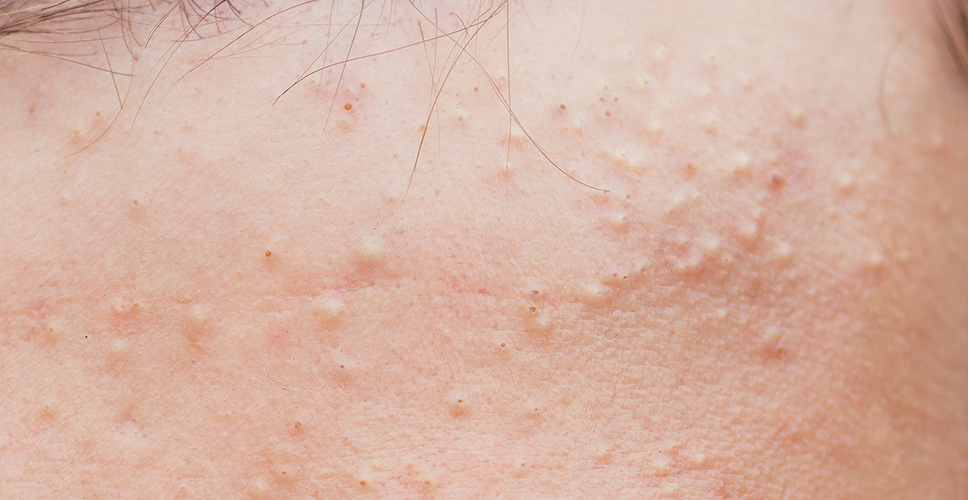
  • Whiteheads (closed) form when the plug is covered by a thin layer of skin, appearing as small flesh-coloured or white bumps.

Blackheads

Acne Blackheads 1 - Anova Skin Clinic

Whiteheads

Acne Whiteheads 1 - Anova Skin Clinic

What Are Inflammatory Acne Lesions?

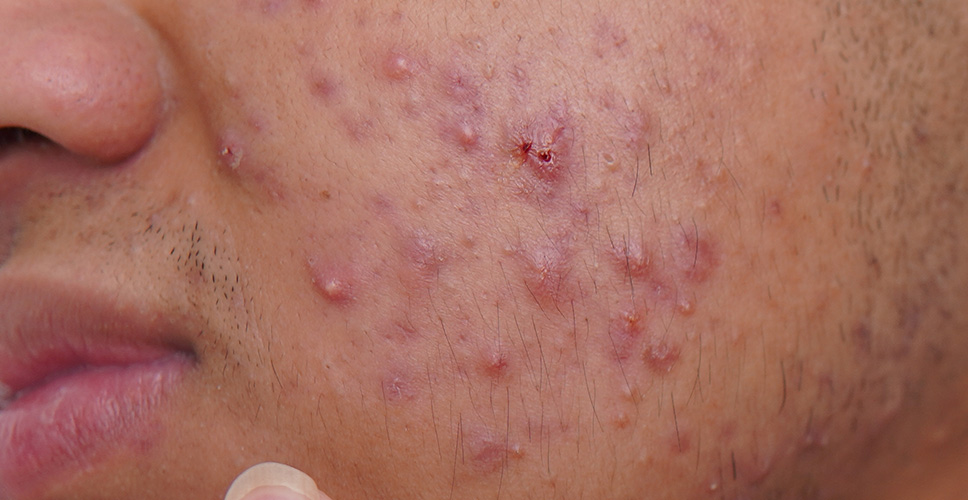
Pimples – Papules & Pustules

Acne Pimples 1 - Anova Skin Clinic

Follicles clogged with excess sebum and dead skin cells that rupture and become inflamed – presenting as raised red bumps in papules, and as raised red bumps with visible pus in pustules.
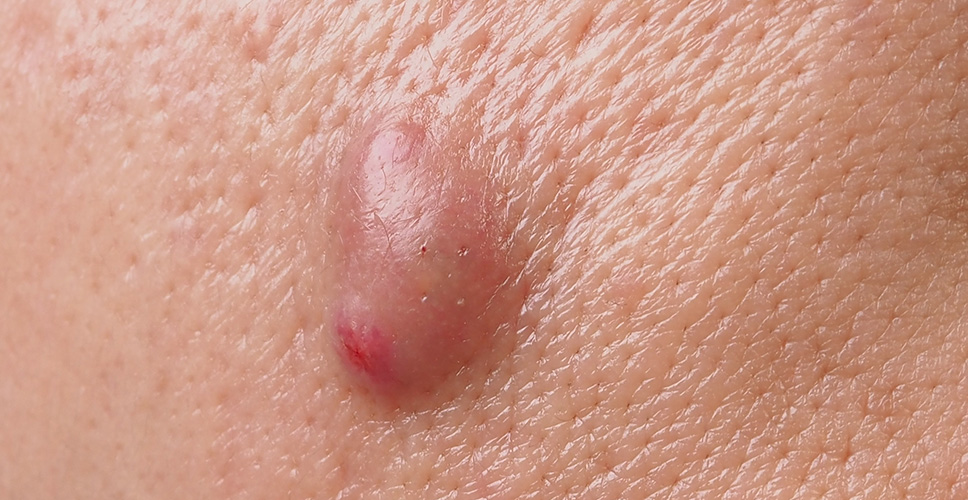
Nodules & Cysts

Acne Nodules 1 - Anova Skin Clinic

Clogged follicles which ruptured the follicle wall deep beneath the skin and triggered an intense immune response and inflammation – carrying highest scarring risk.

  • Nodules – hard, solid lumps (image)
  • Cysts – tender, fluid-filled sacs
  • Hormones – androgens during puberty, menstrual cycles, pregnancy, or from certain medications drive acne through multiple pathways – overproducing sebum, blocking skin follicles, triggering inflammation, and disrupting the skin barrier – making hormonal fluctuations the single strongest acne trigger.
  • Genetics – certain genes increase how readily sebaceous glands and immune cells overreact to triggers, raising the risk and severity of acne in predisposed individuals.
  • Diet – in susceptible individuals, high glycaemic foods and dairy can amplify hormonal activity, indirectly worsening acne, though dietary impact varies considerably between individuals.
  • Stress – elevated cortisol stimulates sebaceous glands and drives skin inflammation, worsening acne flares, though impact varies significantly between individuals.
  • Medication – corticosteroids, lithium, and certain hormonal contraceptives – depending on formulation – can directly trigger or worsen acne as a side effect.
  • Skin Occlusion & Friction – occlusive skincare or makeup, tight clothing, and friction from equipment such as helmets or straps can block pores or trigger localised acne in predisposed individuals.

How To Prevent or Minimise Acne?

SPF 50 sunscreen for hyperpigmentation prevention

DAILY SKINCARE

  • Skin Cleansing – a gentle cleanser removes sunscreen, makeup, excess sebum, and dirt without stripping the skin barrier. Harsh or abrasive cleansers worsen barrier dysfunction and trigger further breakouts.
  • Appropriate & Consistent Skincare Actives – Retinoids, Salicylic Acid, Benzoyl Peroxide, Azelaic Acid and Niacinamide, collectively address the main acne drivers – clogged follicles, acne bacteria, excess sebum, inflammation and barrier dysfunction.
  • Non-Comedogenic Skincare – skincare and makeup labelled pore-friendly or non-comedogenic prevent further follicle blockage to reduce acne flares.
Protective clothing for hyperpigmentation prevention

SPF 50+ SUNSCREEN

  • Daily & All-Year-Round – UV exposure worsens skin inflammation, prolongs post-acne redness and pigmentation, and counteracts retinoid treatment. Broad spectrum SPF 50+ is essential indoors and outdoors year-round as UVA penetrates glass and cloud cover.
  • Non-comedogenic SPF – lightweight, non-clogging formulations maintain UV protection without blocking follicles or worsening breakouts.
Sun avoidance for hyperpigmentation prevention

TRIGGER MANAGEMENT

  • Diet – in susceptible individuals, reducing high glycaemic foods and dairy lowers hormonal activity driving excess sebum production, though impact varies considerably between individuals.
  • Stress – elevated cortisol stimulates sebaceous glands and drives skin inflammation, worsening acne flares, though impact varies between individuals. Regular exercise, adequate sleep, and stress reduction can meaningfully reduce stress-driven acne flares.
  • Skin Occlusion & Friction – occlusive makeup, sports equipment, and friction from clothing or masks can block follicles or trigger localised acne in predisposed individuals.
  • ⚠️Hormonal Management – certain contraceptives can reduce hormonally driven acne – discussing options with a medical doctor is advisable.

What Are Well-Researched Skincare Ingredients for Acne?

INGREDIENT & ACTIONBalances SebumUnclogs FollicleKills Acne BacteriaReduces Skin InflammationStrengthens Skin Barrier
Retinoids* (Retinol, Retinal, Retinoic Acid)++++++++++
Salicylic Acid+++++++++
Benzoyl Peroxide++++++++
Azelaic Acid++++++++
Niacinamide
(Vitamin B3)
++++++++
Mandelic & Lactic Acid (AHAs)++++++++++
Zinc++++
Grading:  +++ Strong action     ++ Moderate action     + Mild action     – Not applicable
*Topical retinoids range in strength and delivery system – prescription-strength retinoic acid delivers faster results but carries a higher irritation potential.
INGREDIENT & ACTIONBalances SebumUnclogs FolliclesKills Acne BacteriaReduces Skin InflammationStrengthens Skin Barrier
Bakuchiol++++++++
Gluconolactone & Lactobionic Acid (PHAs)++++++++
Centella Asiatica (Cica)++++++
Glabridin (from Licorice Root Extract)+++++
Resveratrol+++++
Tranexamic Acid+++
Grading:  +++ Strong action     ++ Moderate action     + Mild action     – Not applicable