What is Skin Ageing & Sun Damage?

Skin ageing and sun damage are progressive and cumulative skin and underlying tissue changes, driven by the passage of time and cumulative UV exposure. They lead to dry and rough skin texture, dullness, uneven pigmentation with sunspots, loss of firmness and volume with fine lines and wrinkles. These changes arise from two distinct but closely interrelated processes – natural ageing, driven by genetics and hormonal decline, and photoageing, driven by cumulative UV exposure. They are interlinked because UV exposure accelerates natural skin ageing mechanisms, and skin chronically exposed to the sun tends to show the changes of natural ageing earlier and more severely. While natural ageing is inevitable, sun damage can be prevented – making this one of the most modifiable skin concerns we can address at Anova Skin Clinic.

Skin Ageing & Sun Damage

What Are the Main Symptoms of Skin Ageing & Sun Damage?

Natural Skin Ageing

Concerns Skin Ageing Natural Skin 1 - Anova Skin Clinic
  • Driven by genetics and hormones
  • Epidermal skin thinning leading to dry and dull skin texture
  • Uneven skin pigmentation
  • Dermal skin thinning leading to loss of firmness, volume, fine lines and wrinkles
  • Loss of elasticity from elastin decline

Sun Damage or
Photoageing

Concerns Skin Ageing Sun Damage 1 - Anova Skin Clinic
  • Driven by UV radiation from sun exposure
  • Epidermal thickening leading to dry, rough, thickened, “leathery” and sallow skin texture
  • More uneven and prominent pigmentation
  • Dermal skin thinning leading to loss of firmness, volume, deeper wrinkles and furrows
  • Loss of elasticity from dysfunctional and disorganised elastin called solar elastosis
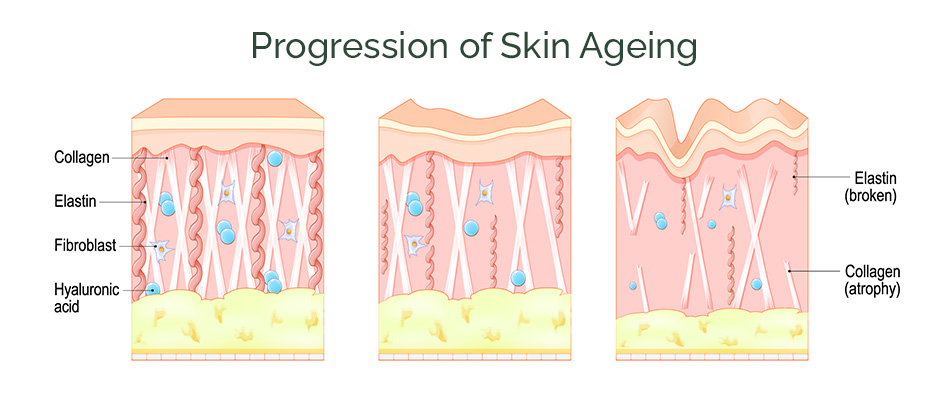
Symptoms of skin ageing diagram
  • Natural Ageing – Skin ageing is multifactorial, resulting in progressive structural and functional changes across skin and underlying tissues. In the epidermis, keratinocytes and melanocytes’ function deteriorates causing surface build-up, dryness, uneven tone, texture and dullness. In the dermis, fibroblast cells’ function decline causing loss of strength, elasticity, and volume – forming looser and thinner skin with fine lines and wrinkles. These changes collectively drive visible skin ageing becoming progressively evident from the mid-30s onwards.
  • UV Radiation – UV radiation is the leading cause of premature skin ageing called photoageing. In the epidermis, UVB rays cause DNA damage to keratinocytes and melanocytes creating dysfunction and leading to barrier disruption, thickened and rough texture and uneven skin colour. In the dermis, UVA rays damage dermal cells, breaking down collagen and elastin, generating free radicals and chronic inflammation leading to loss of volume and deep wrinkles.
  • Hormonal Decline – Oestrogen plays a critical role in maintaining skin thickness and collagen integrity. In women, significant oestrogen decline during perimenopause and menopause leads to melanocyte dysfunction and dramatically accelerates collagen loss – with ~30% of skin collagen lost in the first five years after menopause – leading to uneven pigmentation, skin thinning, fine lines and wrinkles. Men experience a more gradual decline in testosterone and oestrogen, which partly explains why the visible skin ageing tends to develop later and progress less dramatically than in women.
  • Genetics – Genetic makeup influences timing and severity of skin aging, accounting for up to 60% of variability in how individuals age. Genes determine baseline melanocyte activity, antioxidant capacity, collagen density and skin thickness – influencing how early and how significantly skin ageing develops. That is why the same lifestyle and environmental factors will affect predisposed individuals more readily.
  • Lifestyle – Smoking is one of the most significant lifestyle accelerators of skin ageing through impaired circulation, oxidative stress and chronic skin inflammation. A highly processed diet, poor in protein, antioxidants and essential nutrients impairs collagen synthesis, sedentary lifestyle reduces circulation, while inadequate sleep, chronic stress and high alcohol intake increase oxidative damage and chronic inflammation – all accelerating skin ageing.
  • Environmental Factors – Pollutants from traffic and industry and blue light from digital screens generate free radicals which drive oxidative skin stress and collagen breakdown and accelerated skin ageing.

How To Prevent or Minimise Skin Ageing & Sun Damage?

Summary Hyperpigmentation SPF 50 - Anova Skin Clinic

SUN PROTECTION

  • Broad-Spectrum SPF 50+ – provides high and broad protection against UVA and UVB radiation, both of which accelerate premature skin ageing at the surface and dermal level – applied daily indoors and outdoors year-round as UVA penetrates glass and cloud cover.
  • Sun Avoidance – avoid peak UV hours between 10am and 4pm where possible, particularly in summer and high UV environments.
  • Sun Protective Clothing – UPF 50+ wide-brim hats and clothing provide additional physical UV protection when outdoors.
  • ⚠️Natural skin ageing is inevitable – sun protection will slow down UV-driven skin ageing but cannot reverse already present skin ageing and sun damage.
Skin Ageing Daily Skincare - Anova Skin Clinic

DAILY SKINCARE

  • Consistent Skincare Actives – Retinoids, L-Ascorbic Acid (Vitamin C), Niacinamide and AHAs collectively support skin health and slow down skin ageing.
  • ⚠️Topical skincare actives can improve skin texture and tone, but they cannot fully reverse already established skin ageing and sun damage.
Skin Ageing Lifestyle - Anova Skin Clinic

LIFESTYLE

  • Smoking & Alcohol – both increase skin inflammation, oxidative stress, and collagen breakdown – reducing or eliminating both meaningfully slows skin ageing. 
  • Sleep & Stress – regular sleep schedule and stress management will improve skin resilience to damage.
  • Nutrition – unprocessed and wholefood diet reduces oxidative damage and supports collagen synthesis and skin recovery.
  • Exercise – regular aerobic and resistance training reduces stress hormones, supports circulation, nutrient delivery and helps maintain skin elasticity and dermal thickness over time.

What Are Well-Researched Skincare Ingredients For Sun Damage?

⚠️ While no topical skincare can fully reverse established skin ageing and sun damage, the right skincare actives can meaningfully improve skin texture and tone and slow the rate of further decline over time.

INGREDIENT & ACTIONStrengthens Skin BarrierPromotes Cell TurnoverInhibits Melanin ProductionAntioxidant ProtectionReduces Skin InflammationStimulates CollagenStimulates Elastin
Retinoids* (Retinol, Retinal, Retinoic Acid)++++++++++++++
L-Ascorbic Acid (Vitamin C)++++++++++++
Niacinamide (Vitamin B3)++++++++++++
Lactic & Mandelic Acid (AHAs)+++++++++++
Grading: +++ Strong action ++ Moderate action + Mild action – Not applicable
*Topical retinoids range in strength and delivery system – prescription-strength retinoic acid delivers faster results but carries a higher irritation potential. Retinoids are contraindicated during pregnancy – consult a medical doctor before use.
INGREDIENT & ACTIONStrengthens Skin BarrierPromotes Cell TurnoverInhibits Melanin ProductionAntioxidant ProtectionReduces Skin InflammationStimulates CollagenStimulates Elastin
Bakuchiol+++++++++++++++
Resveratrol+++++++++++
Gluconolactone & Lactobionic Acid (PHAs)++++++++++++
Glabridin (from Liquorice Root Extract)+++++++++++
Silymarin (Milk Thistle)+++++++++