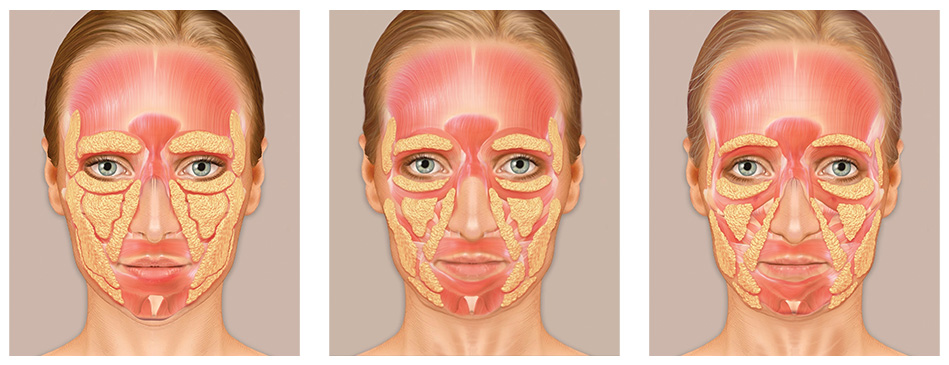
For skin laxity and sagging, Anova Skin Clinic in Floreat, Perth, offers non-surgical HIFU skin tightening and advanced laser treatments. Skin sagging and laxity is a symptom of skin ageing that develops from progressive loss of structural support across the skin and underlying tissues. Beneath the skin, subcutaneous fat, fascia, muscles, ligaments, and bones form the scaffold on which the skin is draped. As each layer changes with age, UV exposure, hormonal changes, and other contributing factors, the skin above reflects those changes – gradually descending and loosening to present as jowls, deepening nasolabial folds, neck and body laxity and folds.


Skin sagging is a structural skin and underlying tissue change – treatments can improve its appearance but cannot fully reverse the established changes.
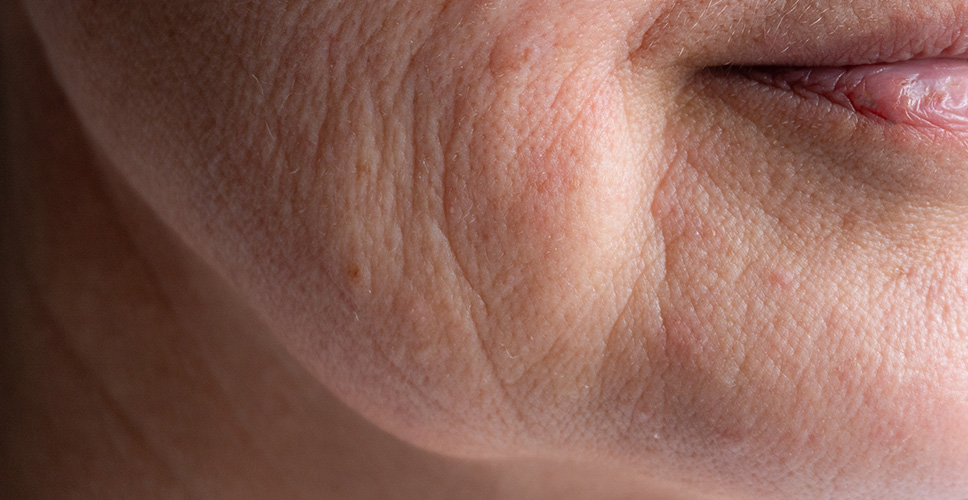
Visible bulging and sagging along the jawline creating loss of jaw definition. As facial fat pads descend, anchoring ligaments weaken, underlying bone recedes and skin loses its recoil – soft tissue drifts downward and accumulates into jowl bulging.
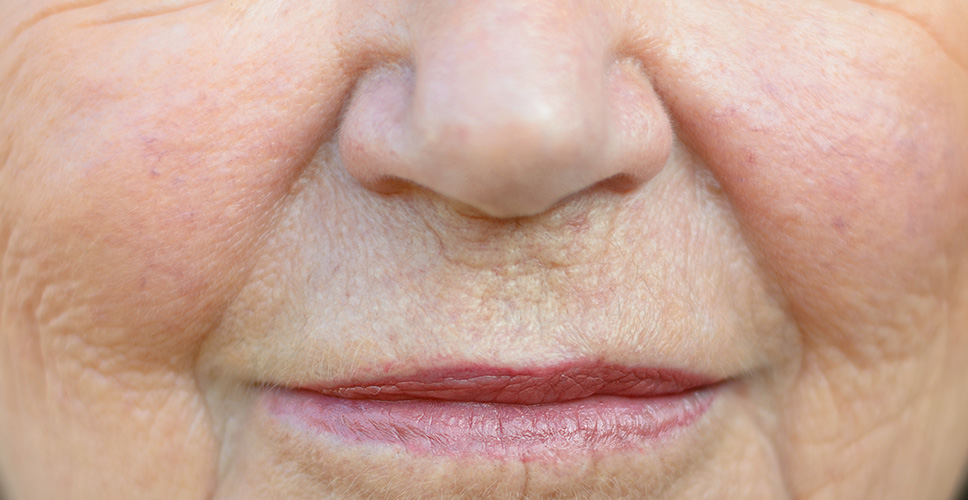
Deepening grooves from the sides of the nose to the corners of the mouth.
As mid-cheek fat pads descend, supporting ligaments weaken, underlying bone recedes and skin loses its recoil – the midface loses its fullness and the skin folds deepen, creating a heavier and more aged lower face appearance.
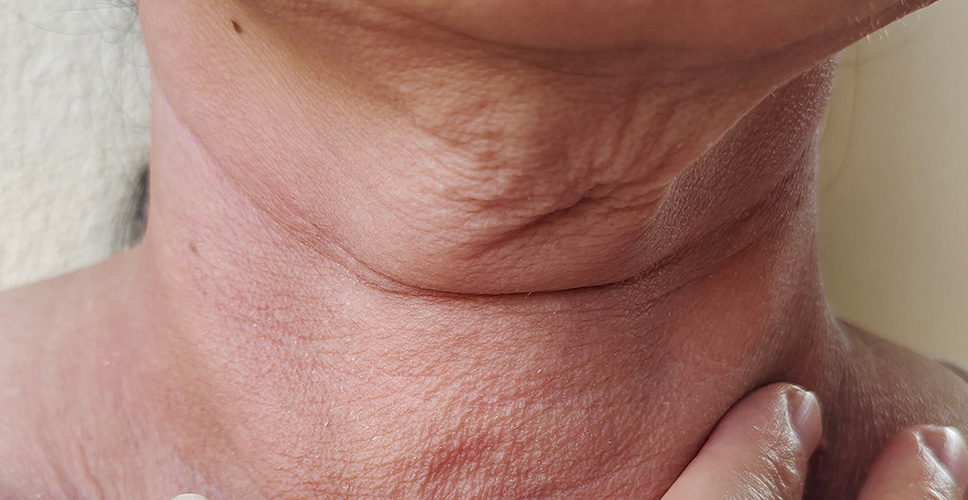
Loose neck skin presenting as horizontal lines, vertical bands, or loose folds – commonly referred to as turkey neck. The neck is particularly vulnerable as its skin is thinner with fewer oil glands than facial skin. As collagen and elastin decline, the skin thins and loses its recoil while fat accumulates beneath the chin – reducing firmness and altering neck contour. Beneath, the platysma muscle weakens and separates – creating characteristic vertical bands from chin to collarbone – while the mandible bone gradually recedes, reducing jaw-neck definition and structural support.
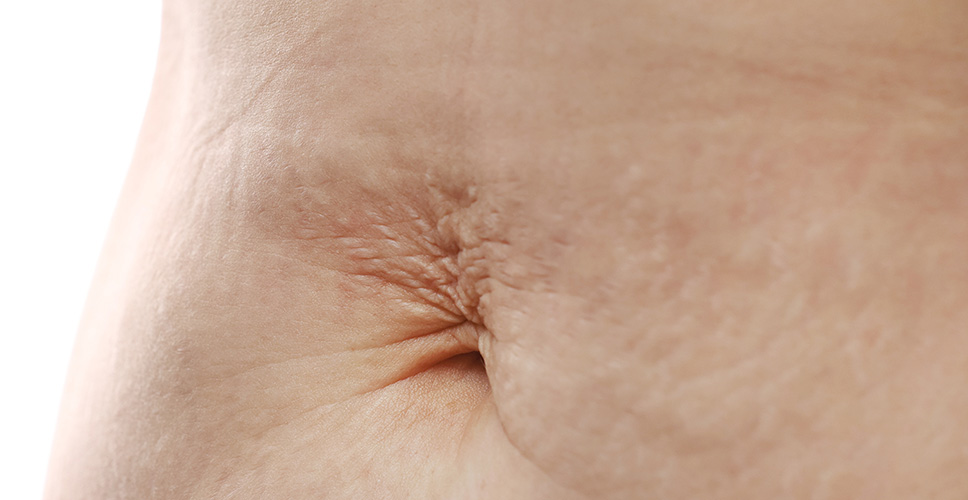
Loose skin on the abdomen, inner arms, inner thighs, above the knees, and other areas where skin has lost its structural support. Body laxity is driven by both changes in skin and underlying tissues – decline in collagen and elastin reduces skin firmness and recoil, while muscle mass loss and fat redistribution progressively reduce the support on which the skin relies. Where skin has been significantly stretched – through pregnancy or repeated weight fluctuations – and underlying volume reduces, the skin sags, sometimes forming overlapping folds.


⚠️Topical skincare actives cannot reverse established skin sagging and laxity – rather they can support collagen and elastin production, improve skin quality and slow the rate of structural skin decline over time.
| INGREDIENT & ACTION | Stimulates Collagen | Stimulates Elastin | Reduces Skin Inflammation | Antioxidant Protection |
|---|---|---|---|---|
| Retinoids* (Retinol, Retinal, Retinoic Acid) | +++ | ++ | ++ | + |
| L-Ascorbic Acid (Vitamin C) | +++ | + | ++ | +++ |
| Peptides** | +++ | ++ | + | + |
| Niacinamide (Vitamin B3) | + | + | ++ | ++ |
| Grading: +++ Strong action ++ Moderate action + Mild action *Topical retinoids range in strength and delivery system – prescription-strength retinoic acid delivers faster results but carries a higher irritation potential. Retinoids are contraindicated during pregnancy – consult a medical doctor before use. ** Peptide efficacy varies significantly by type and formulation. For skin sagging & laxity, the most relevant peptides are signal peptides – Palmitoyl Tripeptide-1, Palmitoyl Tetrapeptide-7 and Copper Peptides (GHK-Cu) – which have the strongest evidence for stimulating collagen and elastin production at the dermal level. |


